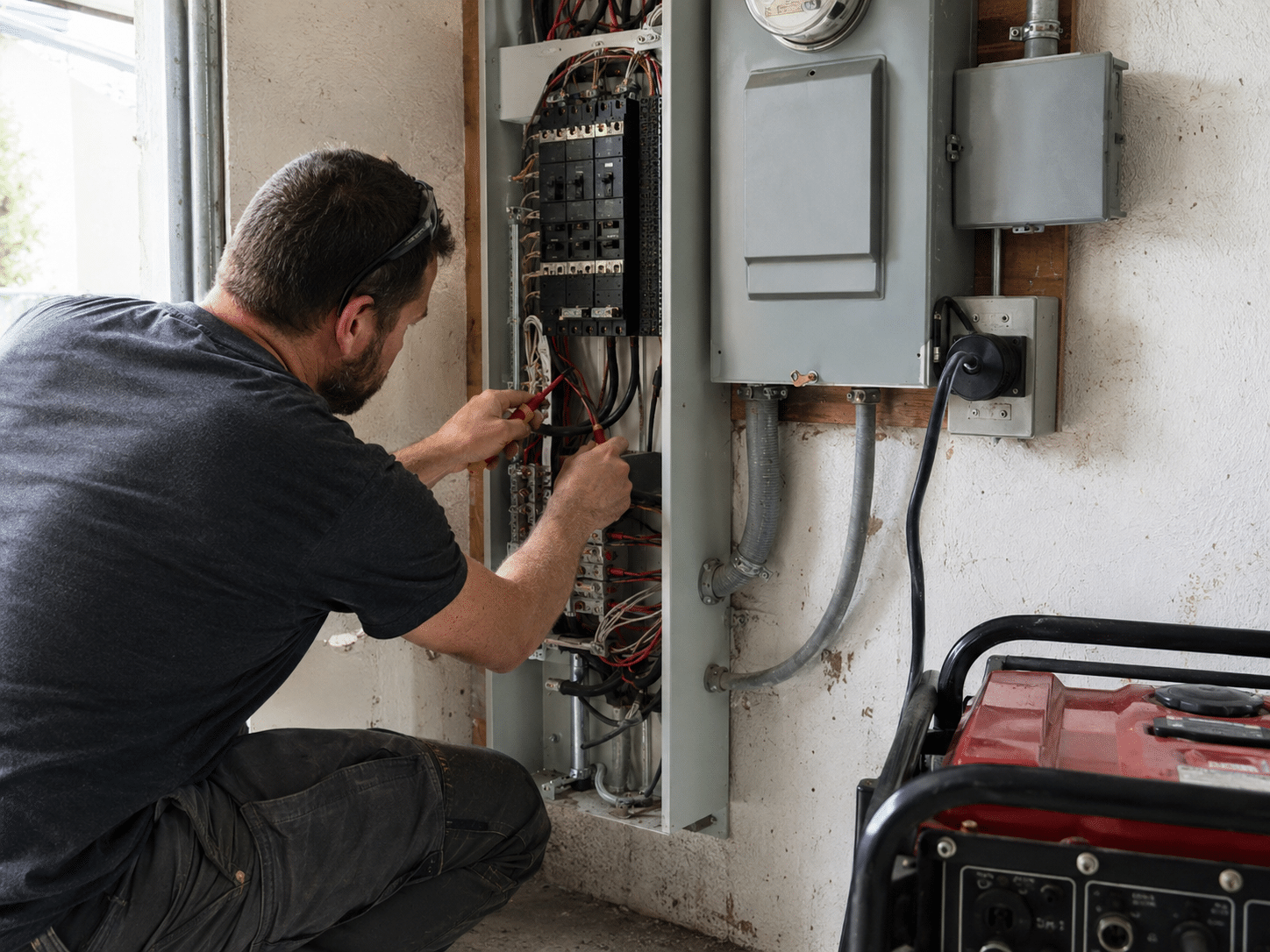
Running an extension lead plugged into a power point to connect a generator to your house might seem like an easy fix during an outage. But it’s not, and not just because it’s inconvenient. It’s a genuine safety risk and, for any permanent connection, connecting a portable generator to your house via a power point is illegal in QLD.
Connecting a Generator to your House: Key Takeaways
- Connecting a generator to your house requires a licensed electrician. DIY is illegal under Queensland electrical safety regulations.
- The primary risk of an improper connection is backfeeding: live voltage sent back into the grid that can electrocute linesmen working on the lines.
- There are three connection options: a generator inlet plug, a manual changeover switch, or an automatic transfer switch. Each option suits different needs and budgets.
- Standard changeover switch installation can start from $1,050 in Brisbane with HSJ. Total costs vary based on system size and whether your switchboard needs upgrading.
- If you already own a generator, a licensed electrician can assess it and install a compatible changeover system around it.
Why You Can’t DIY a Generator Connection to your house
Queensland electrical safety regulations require any permanently connected generator to be installed and connected to your house by a licensed electrician. This isn’t a technicality, it exists because the consequences of getting it wrong are serious.
Backfeeding & Electrocution Risk
When a generator is connected to your home’s wiring without a proper isolation switch, it can push live voltage back through the meter and into the street-level grid. Linesmen working on what they believe is a de-energised line can be electrocuted. It can also energise your property’s earthing system, creating a shock risk for anyone on site.
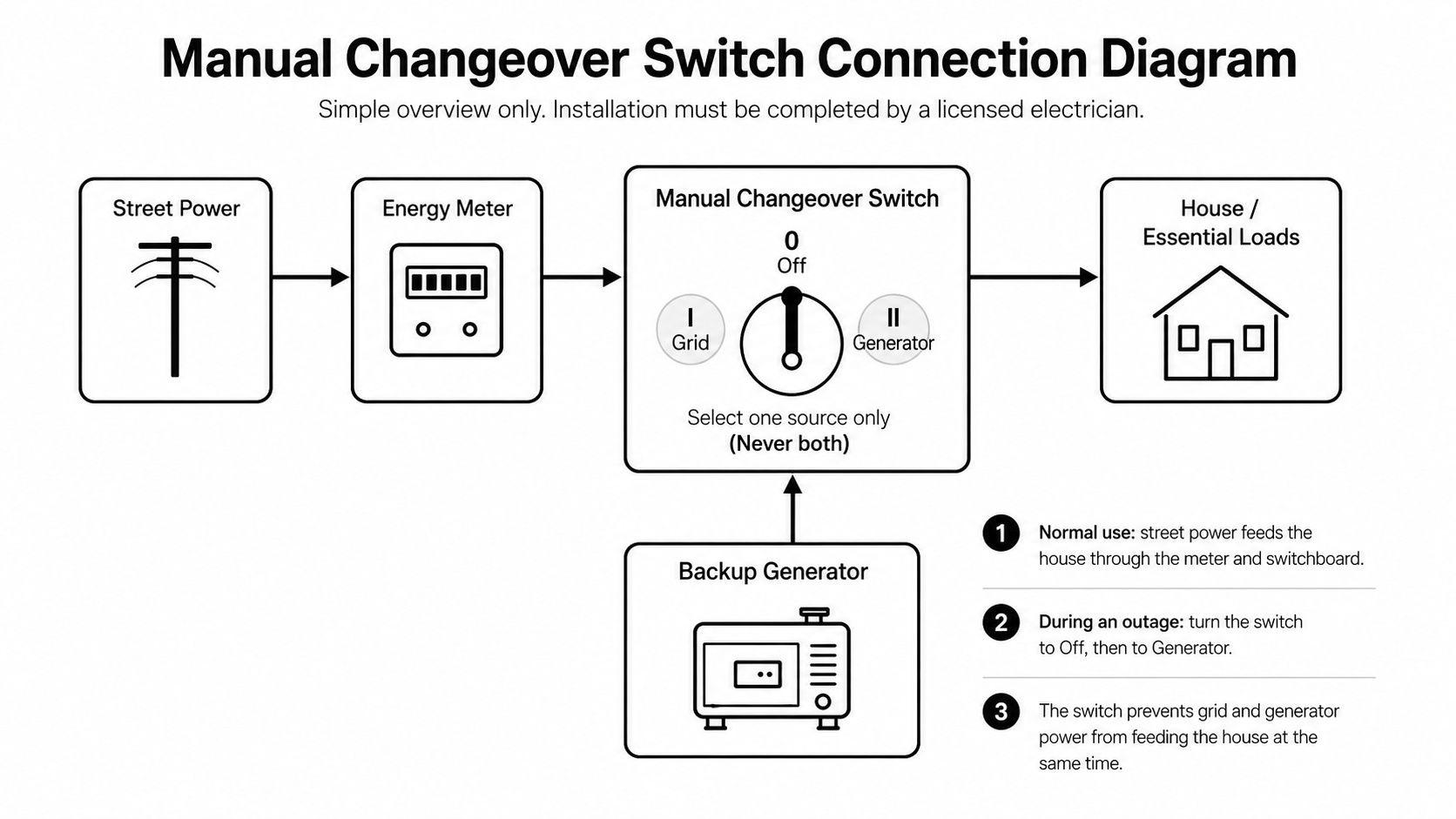
A changeover switch installed by a licensed electrician prevents this. It ensures your property is connected to either mains power or generator power at any given time, never both simultaneously.
How to Safely Connect a Generator to a House
Energex is clear on the requirement: “The only way to safely connect a generator to your home or business’ wiring is to have an isolating switch installed by a licensed electrical contractor.”
An isolating switch (also referred to as a changeover switch) creates a safe, permanent connection between your generator system and your property’s electrical installation. It ensures power can only be supplied from one source at a time, preventing dangerous back-feeding into the electricity network.
There are two main types of generator changeover systems: Manual Changeover and Automatic Transfer Switch (ATS).
Manual Changeover Switch
A manual changeover switch is the most common and cost-effective option for residential properties.
This system includes a weatherproof generator inlet plug installed near your switchboard. During a power outage, you connect your generator to the inlet plug using a suitable lead, start the generator, and manually switch the changeover switch from mains power to generator power. When mains power is restored, you simply reverse the process.
HSJ’s Standard, Deluxe, and Premium generator changeover packages all use this setup. It is compliant, reliable, and ideal for homes where someone is available to operate the system during an outage.
How does a changeover switch work? Check out the manual changeover switch diagram below.
Automatic Transfer Switch (ATS)
An Automatic Transfer Switch (ATS) provides a fully automated backup power solution.
Unlike a manual system, the generator is permanently connected to the electrical installation and does not require a generator inlet plug. The ATS continuously monitors mains power, detects an outage, automatically starts the generator, and transfers the property to generator power within seconds. Once mains power is restored, the ATS automatically switches the property back to the grid and shuts the generator down.
HSJ’s automatic changeover switch installations start from $2,105 for single-phase systems. While the upfront investment is higher, it offers maximum convenience and is well-suited to rural properties with frequent outages, businesses that require uninterrupted operation, and homes relying on critical equipment.
What to Have Ready Before Calling an Electrician
If you’ve thought through a few things beforehand, the installation goes more smoothly, and you’ll get a more accurate quote.
Know what you want to keep running during an outage. The answer determines what system size you need. Lights and a fridge is a very different load to lights, fridge, air conditioning, hot water, and a workshop. The more you want to run, the larger the system and generator required.
If you already own a generator, have the model and specs ready. A licensed electrician will assess its output and advise what circuits it can realistically support. Running a generator at or above capacity consistently shortens its life and can damage connected equipment.
Know your switchboard situation. Older switchboards often need upgrading to support a generator installation. Ceramic fuses, insufficient space, or non-compliant configurations are common on properties built before the 1990s. HSJ handles switchboard upgrades as part of the same job when needed, but it’s worth factoring into your budget expectations.
Generator Changeover Installation: What’s Involved?
Connecting a generator to a house follows a clear sequence.
- The electrician isolates power to the property,
- installs the changeover switch and all associated equipment,
- dead-tests the installation,
- re-energises the property,
- then runs a live test and full load test with the generator before handover.
The whole process is typically completed in a single visit.
At handover, you receive a testing and installation certificate, a walkthrough of how to operate the system, and a generator supplied with a full tank of fuel and 100-hour service kit if you’ve purchased through HSJ.
What Does It Cost to Connect a Generator to Your House?
Costs vary based on system size, whether you’re supplying your own generator or purchasing through the installer, and whether your switchboard needs upgrading. Prices below are from HSJ Electrical and are a guide only. Contact us for a free quote specific to your property.
Changeover switch installation only
You supply the generator, we’ll install the changeover switch.
- Standard 15A system from $1,050 inc GST
- Deluxe 32A system from $1,350 inc GST
- Premium 63A full home system from $1,700 inc GST
Generator supply and installation
We’ll source and supply the right generator for your needs, plus handle the changeover switch installation.
- Standard setup from $2,745 inc GST
- Deluxe setup from $5,745 inc GST
- Premium setup from $8,812 inc GST
Automatic transfer switch
In addition to changeover system, the automatic transfer switch transfers your property to generator power within seconds.
- Single phase from $2,105 inc GST
- Three phase from $2,420 inc GST
Switchboard upgrades
Costs vary depending on the condition and compliance of your existing switchboard. Your electrician will assess this during the quoting process and advise if any upgrades are required. HSJ can complete any necessary switchboard upgrades as part of our electrical services.
Ready to get your generator connected the right way?
Ready to get your generator connected the right way? Get a free quote and we’ll recommend the right setup for your property.
Frequently Asked Questions
Can I run a generator through a power point or extension lead?
You can run appliances directly from a generator via extension leads — but you cannot connect a generator to your home’s fixed wiring through a power point. Doing so risks backfeeding the grid and is illegal. A proper inlet plug and changeover switch installation is required for any permanent or semi-permanent connection.
How long does a generator installation take?
A standard changeover switch installation is typically completed in a single day. If switchboard work is needed, allow additional time depending on scope.
Do I need to own a generator before getting the changeover system installed?
No. You can have the changeover system installed first and add the generator later — or purchase both through your electrician at the same time. HSJ supplies generators across all system tiers, sized to match the installation.
Is a changeover switch the same as a transfer switch?
Yes. Transfer switch is the more commonly used international term; changeover switch is standard terminology in Australia. They refer to the same device.
What areas does HSJ cover?
HSJ Electrical & Air installs backup generator systems across Brisbane and the Moreton Bay Region. Based in Morayfield, we commonly travel to Caboolture, Narangba, Burpengary, North Lakes, Kilcoy, Woodford, and Glass House Mountains. We’re happy to provide services no matter where you are.
Further Resources
You can read more information from credible resources: